February 1839
The Sook Warehouse Raid
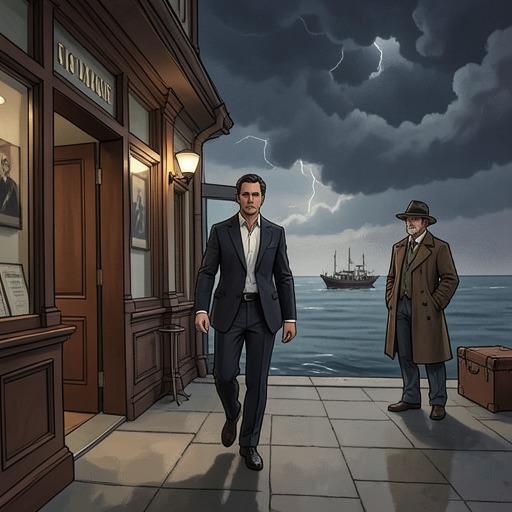
Imperial forces searched [Sook Chun-Yuen](entity:character-recall-character-sook-chun-yuen-ee46a3b2b6ba)’s warehouse in [Kwangchow](entity:location-recall-location-kwangchow-3974987a8b31) and found opium hidden among the tea. He was executed without trial, leaving his young son, [Ah Sook](entity:character-recall-character-ah-sook-ca2d6829bc4a), to confront grief and uncertainty about his father’s guilt.
The event shaped Ah Sook’s lifelong hatred of the opium trade and his dependence on [Francis Carver](entity:character-recall-character-francis-carver-d728e8475128), the young merchant who offered to take over the family business.
1841
The Fall of Kwangchow
During the capture of [Kwangchow](entity:location-recall-location-kwangchow-3974987a8b31) by British forces, [Quee Long](entity:character-recall-character-quee-long-6c8947305eb7)’s father, Quee Zuang, was taken prisoner along with other defenders. The city’s repeated defeats became a source of lasting shame for Quee Long.
His father’s experience helped form Quee Long’s pride, disillusionment, and fierce opposition to the imperial opium trade that later flourished in the colonies.
March 1852 and the years that follow
Wells Writes His Brother
[Crosbie Wells](entity:character-recall-character-crosbie-wells-b95b841dcc1f) wrote to his half-brother, [Alistair Lauderback](entity:character-recall-character-alistair-lauderback-eb698b9fe4c8), explaining that they shared a father and asking for help returning to England. Lauderback never replied, but kept the letters.
Wells continued writing for years, shifting from pleading for money to imagining a brotherly bond with the distant politician. The correspondence later became crucial evidence of their kinship and of Lauderback’s long silence.
1839–1854
Carver Betrays the Sook Family
After [Sook Chun-Yuen](entity:character-recall-character-sook-chun-yuen-ee46a3b2b6ba)’s death, [Francis Carver](entity:character-recall-character-francis-carver-d728e8475128) took control of the family business and employed [Ah Sook](entity:character-recall-character-ah-sook-ca2d6829bc4a). For years Ah Sook trusted him, unaware that Carver was using the Sook warehouse to smuggle opium into China.
When Ah Sook followed Carver to [Sydney](entity:location-recall-location-9c9a4d0abdf2), he was beaten outside the White Horse Saloon. Carver watched without acknowledging him, confirming Ah Sook’s sense of betrayal.
1854
Ah Sook’s Murder Trial
After a brawl at the White Horse Saloon, [Ah Sook](entity:character-recall-character-ah-sook-ca2d6829bc4a) entered the room where Jeremy Shepard lay dead and was arrested. He could not understand the English proceedings and was not provided a translator.
Margaret Shepard testified that Jeremy had killed himself, saving Ah Sook from conviction. Ah Sook left the trial believing he owed her a life-debt, while [George Shepard](entity:character-recall-character-george-shepard-f61ac20ff386) carried a private grievance that would endure for years.
1854 and the following decade
Carver’s Conviction
[Francis Carver](entity:character-recall-character-francis-carver-d728e8475128) was convicted of smuggling young women from [Kwangchow](entity:location-recall-location-kwangchow-3974987a8b31) aboard the Palmerston. He received ten years of penal servitude on [Cockatoo Island](entity:location-recall-location-cockatoo-island-9d988067cfdd) and lost his connection to [Dent & Co.](entity:organization-recall-organization-dent-co-0bd4a5827c13)
[Ah Sook](entity:character-recall-character-ah-sook-ca2d6829bc4a) learned of Carver’s conviction and began waiting for his release, determined to avenge the betrayal of his family. After Carver’s sentence ended, the trail eventually led Ah Sook to [New Zealand](entity:location-recall-location-1b610d9ff0fe).
By June 1862
Lydia Marries Crosbie
Lydia Wells, then known as Lydia Greenway, ran a gambling house. When a customer won its heavily weighted wheel’s jackpot, she could not pay him the promised sum and offered marriage instead.
[Crosbie Wells](entity:character-recall-character-crosbie-wells-b95b841dcc1f) accepted. Their union was an expedient bargain rather than a romance, and they soon lived apart, with Lydia in [Dunedin](entity:location-recall-location-dunedin-72476ddb987d) and Crosbie on the goldfields.
March 1864
Wells Strikes Gold
[Crosbie Wells](entity:character-recall-character-crosbie-wells-b95b841dcc1f) made a major gold discovery at [Dunstan](entity:location-recall-location-dunstan-86c6d37f55ab). He kept the fortune unreported and hired a private escort to move it to [Dunedin](entity:location-recall-location-dunedin-72476ddb987d), where Lydia stored it in a safe.
He continued prospecting, hoping for another strike, while the hidden fortune remained vulnerable to theft. The loss of that gold would eventually draw together the novel’s scattered mysteries.
June 1864
Carver Returns from Prison
After his release from [Cockatoo Island](entity:location-recall-location-cockatoo-island-9d988067cfdd), [Francis Carver](entity:character-recall-character-francis-carver-d728e8475128) went to [Dunedin](entity:location-recall-location-dunedin-72476ddb987d) and joined the crew of the [Godspeed](entity:object-recall-object-godspeed-8f7cb2c8caf7). He renewed his relationship with Lydia, who had married [Crosbie Wells](entity:character-recall-character-crosbie-wells-b95b841dcc1f) during Carver’s imprisonment.
[Ah Sook](entity:character-recall-character-ah-sook-ca2d6829bc4a) searched for Carver in Dunedin but lost his trail. He eventually settled on the [West Coast](entity:location-recall-location-a7b39575b729), believing that his chance for revenge had passed.
May 1865
Carver Sponsors Staines
Newly arrived in [Dunedin](entity:location-recall-location-dunedin-72476ddb987d), [Emery Staines](entity:character-recall-character-emery-staines-17032641873c) fell into a gambling debt. [Francis Carver](entity:character-recall-character-francis-carver-d728e8475128) offered to pay it and finance his move to the goldfields in exchange for half-shares in Staines’s first claim.
Staines accepted the agreement, amused by Carver’s crafty manner and unaware of the danger of becoming his business partner. Carver directed him toward the [West Coast](entity:location-recall-location-a7b39575b729) and the schooner Blanche.
12 May 1865
Carver Acquires the Godspeed
[Francis Carver](entity:character-recall-character-francis-carver-d728e8475128) purchased the [Godspeed](entity:object-recall-object-godspeed-8f7cb2c8caf7) from [Alistair Lauderback](entity:character-recall-character-alistair-lauderback-eb698b9fe4c8), using the name Francis Wells. Before leaving to complete the transaction, he asked [Emery Staines](entity:character-recall-character-emery-staines-17032641873c) to guard a locked chest containing five gowns.
Staines accepted, despite Carver’s pistol and secrecy. The gowns concealed a fortune, and the false name used in the sale would later become a central legal and personal puzzle.
12 May 1865
Wells Attacks Carver
[Crosbie Wells](entity:character-recall-character-crosbie-wells-b95b841dcc1f) confronted [Francis Carver](entity:character-recall-character-francis-carver-d728e8475128) in [Dunedin](entity:location-recall-location-dunedin-72476ddb987d), believing Carver had stolen his gold and papers. He attacked Carver with a poker and a knife, leaving a lasting scar across his cheek.
Carver survived, but Wells’s assault helped cement Carver’s identity as a scarred former convict and intensified his pursuit of the missing gold and the man who had taken it.
May 1865
Wells Escapes with the Fortune
After recovering from the confrontation, [Crosbie Wells](entity:character-recall-character-crosbie-wells-b95b841dcc1f) tried to leave [Dunedin](entity:location-recall-location-dunedin-72476ddb987d) with his gold and identity papers. He asked a customs official to let him board the Blanche quietly and take a shipping crate with him.
The official discovered a cargo entry bearing Wells’s name and suspected him of evading duty. Wells’s attempt to escape with his fortune became entangled with the missing crate and the shipment Carver had wanted returned.
Spring 1865
Anna Is Recruited
[Anna Wetherell](entity:character-recall-character-anna-wetherell-96da43ebe965) arrived in [Dunedin](entity:location-recall-location-dunedin-72476ddb987d) alone, hoping to find work near the goldfields. Lydia Wells took her in under the story that a young boarder had failed to arrive, then gradually drew her into the [House of Many Wishes](entity:location-recall-location-house-of-many-wishes-2ff8bf736537).
Anna began tending bar and was eventually employed as a sex worker. Her dependence on opium and her precarious position left her vulnerable to the people around her.
May 1865
The Godspeed Sale Is Used for Blackmail
[Francis Carver](entity:character-recall-character-francis-carver-d728e8475128) confronted [Alistair Lauderback](entity:character-recall-character-alistair-lauderback-eb698b9fe4c8) with a scheme involving a shipment of gowns and a fortune sewn into their seams. The papers made it appear that Lauderback had paid for the gowns and was illicitly shipping gold.
Threatened with charges that could destroy his career, Lauderback surrendered the [Godspeed](entity:object-recall-object-godspeed-8f7cb2c8caf7) to Carver. The blackmail relied on Lauderback’s shame about his affair with Lydia and on the apparent proof in the shipping records.
May–June 1865
The Gowns Go Missing
The chest containing the gold-laden gowns disappeared from the shipping chain. [Francis Carver](entity:character-recall-character-francis-carver-d728e8475128) placed an advertisement in the [West Coast Times](entity:organization-recall-organization-west-coast-times-ef51f773ddf0) offering rewards for its return, using the identity Crosbie Francis Wells.
[Benjamin Löwenthal](entity:character-recall-character-benjamin-l-wenthal-75758c202063) remembered the unusual name and the scarred man who placed the notice. The lost chest would eventually reach [Hokitika](entity:location-recall-location-hokitika-b1e123525ca1), where its contents passed through several unsuspecting hands.
Mid-1865
Staines Arrives in Hokitika
[Emery Staines](entity:character-recall-character-emery-staines-17032641873c) arrived in [Hokitika](entity:location-recall-location-hokitika-b1e123525ca1) and began prospecting, quickly becoming one of the richest young men in the district. He purchased the [Aurora claim](entity:location-recall-location-aurora-claim-70ad4373cab0) and retained [Quee Long](entity:character-recall-character-quee-long-6c8947305eb7) as its worker under an indenture.
Staines’s fortune and popularity made him a conspicuous figure, while his agreement with Carver tied his success to a man whose past he scarcely understood.
1865, before October
Anna Buys the Salvage Gowns
Anna bought five dresses salvaged from a wreck, including an orange gown she used for work. She did not know that Lydia Wells had made the dresses or that they contained gold sewn into their seams.
The gowns became a hidden reservoir of wealth carried by Anna without her knowledge, while their appearance and movement through the town drew several men into mistaken theories about smuggling.
1865, months before January 1866
Quee Finds the Hidden Gold
While Anna visited the opium den at Kaniere, [Quee Long](entity:character-recall-character-quee-long-6c8947305eb7) discovered gold sewn into her dresses. He secretly removed it while she slept, replacing the weight with lead so she would not notice.
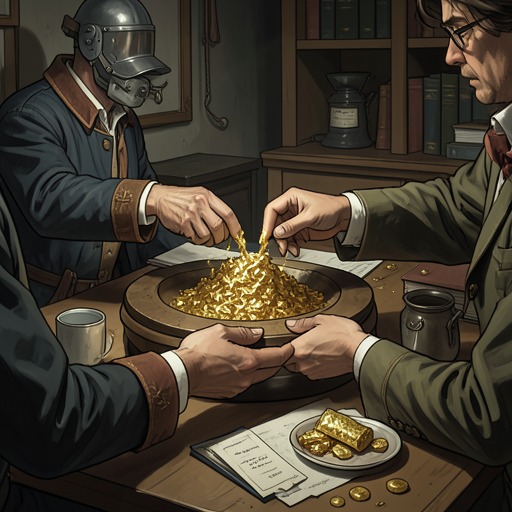
Quee smelted the gold into bars and stamped them Aurora, hoping to claim earnings from the mine to which he was bound. His action was both an attempt at self-liberation and a response to the exploitation he had suffered under [Dick Mannering](entity:character-recall-character-dick-mannering-b8baa765d42e).
Before July 1865
Mannering Salts the Aurora
[Dick Mannering](entity:character-recall-character-dick-mannering-b8baa765d42e) had previously salted the Aurora by repeatedly scattering the same gold into its gravel, making the barren claim appear productive to buyers. [Quee Long](entity:character-recall-character-quee-long-6c8947305eb7) thwarted the fraud by retorting the gold into bars and marking them with the mine’s name.
Mannering later sold the claim to Staines, concealing that it was a duffer. The scheme explained why Mannering reacted so violently when the Aurora gold surfaced elsewhere.
July 1865
Carver Takes Shares in Aurora
[Francis Carver](entity:character-recall-character-francis-carver-d728e8475128) acquired a fifty-percent share in the Aurora. Soon afterward, its reported returns dwindled, though [Quee Long](entity:character-recall-character-quee-long-6c8947305eb7) continued to produce stamped bars from the gold he had removed from Anna’s dresses.
The mismatch between the mine’s apparent collapse and its gold bars later prompted [Charlie Frost](entity:character-recall-character-charlie-frost-f1147ef1ae04) and others to suspect that Staines had concealed or diverted the yield.
June 1865, then again in 1866
Carver Seeks Wells
[Francis Carver](entity:character-recall-character-francis-carver-d728e8475128) sought information about [Crosbie Wells](entity:character-recall-character-crosbie-wells-b95b841dcc1f), first placing a notice in the [West Coast Times](entity:organization-recall-organization-west-coast-times-ef51f773ddf0) and later offering [Te Rau Tauwhare](entity:character-recall-character-te-rau-tauwhare-b4757e1f23bf) money for Wells’s whereabouts. Tauwhare eventually gave him directions to the [Arahura Valley](entity:location-recall-location-arahura-valley-e28e7345ffd7).
At the time, Tauwhare did not suspect danger. His paid disclosure would later weigh on him when Wells died soon after Carver’s visit.
1865
Wells Settles in the Arahura
After leaving the goldfields and separating from Lydia, [Crosbie Wells](entity:character-recall-character-crosbie-wells-b95b841dcc1f) bought land in the [Arahura Valley](entity:location-recall-location-arahura-valley-e28e7345ffd7) and began building a timber mill. He befriended [Te Rau Tauwhare](entity:character-recall-character-te-rau-tauwhare-b4757e1f23bf), learning about Maori life and sharing food and drink.
Wells sent another letter to [Alistair Lauderback](entity:character-recall-character-alistair-lauderback-eb698b9fe4c8), inviting him to visit and assuring him that he posed no threat. Lauderback’s silence continued, though he kept the letters.
11 October 1865
Carver’s Assault on Anna
[Francis Carver](entity:character-recall-character-francis-carver-d728e8475128) assaulted Anna, who was pregnant. Her child did not survive, and Anna was left badly injured. [Benjamin Löwenthal](entity:character-recall-character-benjamin-l-wenthal-75758c202063) found her and heard her identify Carver as the child’s father.
[Emery Staines](entity:character-recall-character-emery-staines-17032641873c) learned of the assault and went to [Crosbie Wells](entity:character-recall-character-crosbie-wells-b95b841dcc1f), telling him that he intended to give Anna half of his hidden fortune. Wells wrote a deed of gift, but Staines fell asleep before signing it.
Late 1865
Staines Hides the Aurora Gold
[Emery Staines](entity:character-recall-character-emery-staines-17032641873c) removed [Quee Long](entity:character-recall-character-quee-long-6c8947305eb7)’s retorted gold from the camp station and hid it in the [Arahura Valley](entity:location-recall-location-arahura-valley-e28e7345ffd7). He falsified the mine’s return, avoiding the dividends owed to Carver and leaving Quee without the bonus his labor merited.
Staines intended to give half the fortune to Anna, but did not complete the gift deed. His decision to conceal the gold brought his interests together with those of [Crosbie Wells](entity:character-recall-character-crosbie-wells-b95b841dcc1f), whose own stolen fortune was already missing.
14 January 1866, evening
Lauderback Rides to Wells
[Alistair Lauderback](entity:character-recall-character-alistair-lauderback-eb698b9fe4c8) and his aides reached [Crosbie Wells](entity:character-recall-character-crosbie-wells-b95b841dcc1f)’s cottage after a journey through the [Arahura Valley](entity:location-recall-location-arahura-valley-e28e7345ffd7). They found Wells dead at his table, apparently from drink, and later reported that a woman lay unconscious on the road.
Lauderback did not tell the authorities that Wells was his half-brother, nor explain the years of unanswered letters between them. His arrival became the first public account of Wells’s death.
14 January 1866, before Lauderback arrives
Carver Visits Wells
[Te Rau Tauwhare](entity:character-recall-character-te-rau-tauwhare-b4757e1f23bf) saw [Francis Carver](entity:character-recall-character-francis-carver-d728e8475128) enter [Crosbie Wells](entity:character-recall-character-crosbie-wells-b95b841dcc1f)’s cottage before Lauderback’s party arrived. Carver had learned the location from Tauwhare, who had accepted payment for the information.
The visit, the later discovery of laudanum in Wells’s cottage, and Carver’s departure before dawn made him a central suspect in Wells’s death, though the evidence remained circumstantial.
14 January 1866, night
Anna’s Blackout
After spending the evening with [Emery Staines](entity:character-recall-character-emery-staines-17032641873c), Anna returned to the [Gridiron Hotel](entity:location-recall-location-gridiron-hotel-da4a00ef0bfc) and smoked opium. She later woke in custody, with no memory of the hours between leaving Staines and being found unconscious on the [Christchurch Road](entity:location-recall-location-christchurch-road-3f4855b916e9).
She was charged with attempted suicide, though she denied intending to harm herself. The unexplained blackout left her unable to account for the gold sewn into her orange gown or for Staines’s disappearance.
Night of 14 January 1866
Staines Disappears
[Emery Staines](entity:character-recall-character-emery-staines-17032641873c) vanished after Anna left him asleep. His house was found unlocked the next morning, with his valuables untouched and no sign of where he had gone.
Because he was wealthy, young, and responsible for many workers and claims, the town suspected foul play. His disappearance became inseparable from Wells’s death and Anna’s blackout.
Early 15 January 1866
Carver Sails Before Dawn
After returning from Wells’s cottage, [Francis Carver](entity:character-recall-character-francis-carver-d728e8475128) took the [Godspeed](entity:object-recall-object-godspeed-8f7cb2c8caf7) out of [Hokitika](entity:location-recall-location-hokitika-b1e123525ca1) under cover of darkness. The ship’s departure was not properly recorded in the customs log or the newspaper.
Carver’s hasty sailing connected him to the events of the previous night and left the town without a clear account of what had happened aboard or at the cottage.
15 January 1866
The Gown’s Gold Is Found
After being released on bail, Anna returned to Gascoigne’s cottage. Together they opened the orange gown and found gold sewn into its seams; they hid it beneath his bed.
Anna did not know who had placed the gold there or why. Gascoigne concealed it while trying to protect her and understand how the gown related to Staines, Wells, and the lost fortune.
Two days after 14 January 1866
Wells Is Buried
[Crosbie Wells](entity:character-recall-character-crosbie-wells-b95b841dcc1f) was buried at [Seaview](entity:location-recall-location-seaview-30f0576a2f53) after a hastily arranged funeral. [Te Rau Tauwhare](entity:character-recall-character-te-rau-tauwhare-b4757e1f23bf) was denied the chance to conduct a Maori tangi and kept vigil at a distance, grieving the friend he called his brother.
[Cowell Devlin](entity:character-recall-character-cowell-devlin-75261f915c58), who had found a partly burned gift deed in Wells’s stove, hid it inside his Bible rather than disclose it to the authorities or Anna.
After Wells’s burial, January 1866
The Fortune Is Discovered
[Edgar Clinch](entity:character-recall-character-edgar-clinch-bd9be30b5125) purchased Wells’s land and hired [Harald Nilssen](entity:character-recall-character-harald-nilssen-b7b726077df2) to clear the cottage. Nilssen found a fortune hidden throughout the room, valued at more than four thousand pounds, along with a phial of laudanum.
The gold was held in escrow after Lydia Wells arrived claiming to be Wells’s widow. The discovery transformed a dead hermit’s neglected estate into the center of a legal and criminal tangle.
27 January 1866, evening
Moody Arrives at Hokitika
[Walter Moody](entity:character-recall-character-walter-moody-26503ef983de) arrived in [Hokitika](entity:location-recall-location-hokitika-b1e123525ca1) after a storm-tossed voyage aboard the [Godspeed](entity:object-recall-object-godspeed-8f7cb2c8caf7). During the crossing, he believed he had seen a bleeding man emerge from a shipping crate and cry Anna’s name, Magdalena.
Still shaken, Moody entered the [Crown Hotel](entity:location-recall-location-crown-hotel-37bf948b06c1) and found twelve men gathered there in secret. [Thomas Balfour](entity:character-recall-character-thomas-balfour-2db837abdd7b) engaged him in conversation while the others silently assessed the stranger.
27 January 1866, evening
The Crown Council Begins
[Thomas Balfour](entity:character-recall-character-thomas-balfour-2db837abdd7b) questioned Moody about his background and his passage aboard the [Godspeed](entity:object-recall-object-godspeed-8f7cb2c8caf7). When Moody revealed that Carver had commanded the ship and that something in its cargo seemed criminal, the assembled men abandoned their pretence of indifference.
They told Moody that a murder was suspected and invited him to hear the tangled history that had brought them together. The meeting joined bankers, merchants, miners, officials, and Chinese and Maori witnesses in a shared but uncertain investigation.
27 January 1866, earlier that day, recounted at the council
Lauderback Confesses the Blackmail
Balfour told the council how [Francis Carver](entity:character-recall-character-francis-carver-d728e8475128) had blackmailed [Alistair Lauderback](entity:character-recall-character-alistair-lauderback-eb698b9fe4c8) by making a cargo of gowns and gold appear to be evidence of adultery, theft, and customs fraud. Carver demanded the [Godspeed](entity:object-recall-object-godspeed-8f7cb2c8caf7), and Lauderback surrendered it.
The story connected the ship to Lydia Wells, whose gowns had contained the gold. Balfour also revealed that Lauderback believed Carver and [Crosbie Wells](entity:character-recall-character-crosbie-wells-b95b841dcc1f) were brothers, a claim that sharpened Moody’s attention.
27 January 1866, recounted at the council
The Missing Crate Confession
Balfour admitted that Lauderback’s shipping crate had disappeared from [Gibson Quay](entity:location-recall-location-gibson-quay-29f78167ecee) and that he had lied to Lauderback about its whereabouts. He feared that Carver had stolen it, since it contained papers that could challenge the ship’s sale.
The recovered crate aboard the [Godspeed](entity:object-recall-object-godspeed-8f7cb2c8caf7) would later prove that the ship had carried a mysterious passenger and would expose a further link between Carver, Staines, and Wells.
27 January 1866, earlier that day, recounted at the council
Tauwhare Names Carver
Balfour questioned [Te Rau Tauwhare](entity:character-recall-character-te-rau-tauwhare-b4757e1f23bf) about the night Wells died. Tauwhare said he had seen a man enter the cottage before Lauderback’s party arrived, but Balfour guessed the man was Carver before Tauwhare could name him.
Tauwhare was angered that Balfour had avoided paying the agreed price. He nonetheless warned that he could provide Maori knowledge and language, not be treated as a source of free odd jobs.
27 January 1866, earlier that day, recounted at the council
Nilssen and Pritchard Suspect a Plot
[Joseph Pritchard](entity:character-recall-character-joseph-pritchard-1846f6b06d7a) argued to [Harald Nilssen](entity:character-recall-character-harald-nilssen-b7b726077df2) that Wells’s death, Staines’s disappearance, the laudanum phial, and the rapid sale of Wells’s property might be parts of a conspiracy. He suspected that the gold had been deliberately planted or diverted.
Nilssen resisted the most extravagant claims but agreed to ask [Quee Long](entity:character-recall-character-quee-long-6c8947305eb7) about the retorted gold. His own commission from the estate made him vulnerable to suspicion, even though he believed he had acted lawfully.
27 January 1866, afternoon
Mannering Threatens Quee
[Charlie Frost](entity:character-recall-character-charlie-frost-f1147ef1ae04) noticed that the Aurora’s returns had collapsed after Carver acquired his share, while its retorted bars bore the mine’s name. He told [Dick Mannering](entity:character-recall-character-dick-mannering-b8baa765d42e), who armed himself and took Frost to confront [Quee Long](entity:character-recall-character-quee-long-6c8947305eb7) in [Kaniere Chinatown](entity:location-recall-location-kaniere-chinatown-fef682c65ad6).
Mannering held Quee at gunpoint and demanded to know where the gold had come from. [Ah Sook](entity:character-recall-character-ah-sook-ca2d6829bc4a) translated Quee’s explanation: the gold had been stolen from Anna’s gowns, then diverted from the mine’s records.
27 January 1866, afternoon
Ah Sook Reveals Wells’s Strike
[Ah Sook](entity:character-recall-character-ah-sook-ca2d6829bc4a) told [Quee Long](entity:character-recall-character-quee-long-6c8947305eb7) that [Crosbie Wells](entity:character-recall-character-crosbie-wells-b95b841dcc1f) had made a major strike at [Dunstan](entity:location-recall-location-dunstan-86c6d37f55ab) years earlier and had transported the fortune with a private escort. That discovery suggested that the gold in Wells’s cottage might have been part of his own hidden wealth.
The explanation did not settle how Quee’s gold had reached the cottage. Ah Sook named [Te Rau Tauwhare](entity:character-recall-character-te-rau-tauwhare-b4757e1f23bf) as another person involved, widening the field of suspicion.
Night of 27 January 1866
The Godspeed Wrecks
At the Crown council, Moody described the bleeding figure he believed he had seen inside a shipping crate aboard the [Godspeed](entity:object-recall-object-godspeed-8f7cb2c8caf7). The group wondered whether the passenger could have been [Emery Staines](entity:character-recall-character-emery-staines-17032641873c), but Moody could not tell whether the man was real or supernatural.
A messenger then reported that the Godspeed had run aground on the bar and foundered. Carver and any passenger still aboard were now exposed to the sea, and the council’s chance of an immediate answer seemed to vanish.
Late January 1866
The Crown Men Bind Together
After the wreck, the men who had gathered at the Crown began to treat one another as allies. They shared suspicion of absent figures, although they had not agreed on who was responsible for the mystery.
Moody assembled their accounts into a provisional chronology and saw that the group’s connection lay less in shared guilt than in their entanglement with the same events.
February 1866
Lydia Opens the Wayfarer’s Fortune
Lydia Wells reopened the [Wayfarer Hotel](entity:location-recall-location-wayfarer-hotel-ced09dcbd5c2) as the [Wayfarer’s Fortune](entity:location-recall-location-wayfarer-s-fortune-1656156df64a), offering fortune-telling and a séance for the spirit of [Emery Staines](entity:character-recall-character-emery-staines-17032641873c). Anna became her assistant, while the widow promised to summon Staines before a select group.
The event drew attention from men who hoped to learn whether Staines was alive, dead, or connected to Wells’s fortune. Lydia’s business mixed spectacle, profit, and a calculated air of supernatural authority.
February 1866
Moody Finds the Letters
When Lauderback’s trunk was mistakenly delivered to Moody’s room, Moody opened it and found a concealed bundle of letters from [Crosbie Wells](entity:character-recall-character-crosbie-wells-b95b841dcc1f). The letters showed that Wells had repeatedly appealed to his half-brother for recognition and help.
They established that Lauderback and Wells shared a father, and revealed that Wells had once possessed a great fortune from [Dunstan](entity:location-recall-location-dunstan-86c6d37f55ab). Moody kept the discovery to himself, feeling that the letters were not his to expose.
February 1866
Carver Returns to Hokitika
[Francis Carver](entity:character-recall-character-francis-carver-d728e8475128) returned to [Hokitika](entity:location-recall-location-hokitika-b1e123525ca1) after the [Godspeed](entity:object-recall-object-godspeed-8f7cb2c8caf7) wreck and arranged to salvage the vessel. He visited the [West Coast Times](entity:organization-recall-organization-west-coast-times-ef51f773ddf0) to advertise its sale, where [Benjamin Löwenthal](entity:character-recall-character-benjamin-l-wenthal-75758c202063) recognized him as the scarred man who had once used the name [Crosbie Wells](entity:character-recall-character-crosbie-wells-b95b841dcc1f).
Löwenthal challenged Carver about his past and Anna’s injuries. Carver denied that Anna’s unborn child had been his, leaving the paternity and motive for the assault unresolved.
February 1866
Carver and Gascoigne Discuss Insurance
[Aubert Gascoigne](entity:character-recall-character-aubert-gascoigne-c402842a6855) approached Carver at the wreck and explained that the [Godspeed](entity:object-recall-object-godspeed-8f7cb2c8caf7) might still be covered by the [Garrity Group](entity:organization-recall-organization-garrity-group-eb87cde511c4)’s protection and indemnity fund. He had learned that Lauderback’s ship had remained insured and could qualify for compensation.
Gascoigne hoped to gain Carver’s confidence for a separate investigation. Carver accepted the advice, while Gascoigne concealed how much he already knew about the insurance arrangement.
18 February 1866
Ah Sook Reunites with Lydia
[Ah Sook](entity:character-recall-character-ah-sook-ca2d6829bc4a) visited Anna at the [Wayfarer’s Fortune](entity:location-recall-location-wayfarer-s-fortune-1656156df64a) and discovered that she had stopped taking opium and left prostitution. Lydia recognized him from their shared past at the White Horse Saloon in [Sydney](entity:location-recall-location-9c9a4d0abdf2).
She recruited him to serve as an exotic presence at her séance, unaware that his thoughts were turning toward revenge on Carver. Ah Sook left believing Staines would appear alive, not as a summoned spirit.
18 February 1866, night
The Séance Turns to Revenge
Lydia staged a séance for [Emery Staines](entity:character-recall-character-emery-staines-17032641873c), using [Ah Sook](entity:character-recall-character-ah-sook-ca2d6829bc4a) and [Quee Long](entity:character-recall-character-quee-long-6c8947305eb7) as part of the performance. She spoke in Cantonese, repeating words Ah Sook had once spoken in private: a promise to kill [Francis Carver](entity:character-recall-character-francis-carver-d728e8475128) in revenge for a murder.
The lamp toppled and the table caught fire, deepening the guests’ confusion. Ah Sook realized that Lydia had repeated his own words and left, newly certain that Carver was in [Hokitika](entity:location-recall-location-hokitika-b1e123525ca1) and that Lydia had recognized him.
After 18 February 1866
Ah Sook Plans Revenge
Believing Carver had been warned of his presence, [Ah Sook](entity:character-recall-character-ah-sook-ca2d6829bc4a) withdrew from [Hokitika](entity:location-recall-location-hokitika-b1e123525ca1) and tried to save five ounces of gold before buying a pistol. He planned to return and kill Carver, even though he knew the law would be unlikely to protect him.
[Quee Long](entity:character-recall-character-quee-long-6c8947305eb7) urged him to question whether revenge was truly his purpose or a way to avoid confronting his addiction. Ah Sook remained determined, and Quee agreed to accompany him to the séance.
18 February 1866
Shepard Finds Devlin’s Deed
[George Shepard](entity:character-recall-character-george-shepard-f61ac20ff386) discovered the partly burned gift deed concealed in [Cowell Devlin](entity:character-recall-character-cowell-devlin-75261f915c58)’s Bible. It named Anna as the intended recipient of two thousand pounds from [Emery Staines](entity:character-recall-character-emery-staines-17032641873c), witnessed by [Crosbie Wells](entity:character-recall-character-crosbie-wells-b95b841dcc1f).
Shepard pressed Devlin about the document and suggested that Anna might claim half the fortune. He then wrote a public reply to Lauderback, exposing the private financing of the gaol-house and threatening to reveal Lauderback’s affair with Lydia.
18 February 1866
Lauderback Attacks the Funding
[Alistair Lauderback](entity:character-recall-character-alistair-lauderback-eb698b9fe4c8) learned that [Harald Nilssen](entity:character-recall-character-harald-nilssen-b7b726077df2)’s commission from Wells’s estate had helped finance the [Seaview gaol-house](entity:location-recall-location-seaview-gaol-house-b3664674d99f). He sent a letter to the [West Coast Times](entity:organization-recall-organization-west-coast-times-ef51f773ddf0) accusing Shepard of using an unauthorized private donation.
Balfour had disclosed the arrangement to Lauderback, breaking the council’s secrecy. Shepard answered by naming Nilssen as the donor and threatening to reveal Lauderback’s former relationship with Lydia.
20 March 1866, morning
Anna Forged the Deed
[Cowell Devlin](entity:character-recall-character-cowell-devlin-75261f915c58) brought the unsigned gift deed to Anna and explained that it was invalid without [Emery Staines](entity:character-recall-character-emery-staines-17032641873c)’s signature. Anna discovered that she could read the document fluently despite her limited literacy, then forged Staines’s signature and hid the deed against her body.
Devlin confronted her, and she threatened to accuse him if he tried to take the paper. She insisted that she was protecting her own claim, while Devlin saw the forgery as a serious crime.
20 March 1866, morning
Anna Leaves Lydia
After Lydia returned, she confronted Anna and Devlin face to face. Anna revealed that the deed gave her the right to claim a portion of the Welsh property; Devlin inadvertently revealed that the deed was related to the blackmail incident involving Loudback. Anna decided to seek legal advice instead of handing the deed
20 March 1866, afternoon
Anna Collapses at Court
Anna met with lawyer John Feros at the [Hokitika Court](entity:organization-recall-organization-802e005d394f) and promised to pay a large sum later if he could help her obtain her rights. Before he could agree, Anna collapsed in his office, apparently affected by the laudanum. Shepard ordered her to be taken to the Hokit
20 March 1866, afternoon
Staines Is Found Alive
Tae Rau Towaari found Emmery Stains severely injured in Crosby Wels's house. Stains was feverish, confused, and could not explain where he had been before; but he was still alive and still believed his gold was buried nearby
20 March 1866
Carver Claims Insurance
[Francis Carver](entity:character-recall-character-francis-carver-d728e8475128) claimed to be an agent of Crosby Wells and sought compensation from the Galtieri Shipowners' Mutual Association by citing the ambiguous signature on the contract for the Goldsbyde. Although Gascoyne knew Carver's true identity, he saw that the objections raised by Lauder
20 March 1866
Mannering Threatens Quee Again
The court transferred Kuilong from the already barren Aurora mining rights to Dick Mannarino's England Dream mining rights. Mannarino admitted that the new mining rights were suitable for workers who could extract gold from tailings, but warned Kuilong not to try to outdo him by underh
20 March 1866, evening
Staines Returns to the Gaol
Prichard and Tawarre took Steynes to [Hokitika](entity:location-recall-location-hokitika-b1e123525ca1) police station, where he demanded to see Anna. Anna was also at the police station, unconscious and locked in place. Devlin agreed to let Steynes stay with her until the doctor arrived
20 March 1866, evening
Ah Sook Is Shot
A Su walked into the courtyard of the [Crown Hotel](entity:location-recall-location-crown-hotel-37bf948b06c1), intending to kill [Francis Carver](entity:character-recall-character-francis-carver-d728e8475128), but was intercepted by [George Shepard](entity:character-recall-character-george-shepard-f61ac20ff386). Shepard shot him and claimed that A Su had drawn a gun, and that he fired to save Carver
27 April 1866, morning
Lydia Wins the Estate Appeal
The Magistrate approved Lydia Carver’s appeal, revoking Clinch’s purchase of Wells’s estate and releasing the fortune to her, after taxes and fees. Nilssen’s commission remained valid because it had been donated to the gaol-house.
The decision seemed to settle the inheritance, but Anna’s newly signed deed threatened to claim half the money for her and Staines. The legal dispute was therefore not truly over.
27 April 1866, morning
Anna Seeks a Solicitor
Anna took the signed deed to [John Fellowes](entity:character-recall-character-john-fellowes-7cfaedfe1bfa) and argued that Staines’s buried fortune could fund the gift. Fellowes agreed to investigate, but demanded payment in advance and was unsettled by Anna’s offer of a large contingent fee.
When she returned that afternoon, she collapsed in his office. The laudanum’s source remained uncertain, and Shepard used the incident to detain her again.
27 April 1866, morning
Moody Defends Anna
[Walter Moody](entity:character-recall-character-walter-moody-26503ef983de) represented Anna at the [Magistrate’s Court](entity:organization-recall-organization-magistrate-s-cou-0f6afb27dea4), where she pleaded not guilty to forgery, disorderly conduct, and assault. The prosecution portrayed her as an opium-dependent woman who had profited from Staines’s disappearance.
Moody challenged the premise of Shepard’s accusations and revealed that the gaoler’s hostility might be connected to [Ah Sook](entity:character-recall-character-ah-sook-ca2d6829bc4a), whom Shepard had killed. The testimony made Shepard’s motives part of the case.
27 April 1866, afternoon
Staines Testifies to the Gift
Staines admitted to falsifying the Aurora’s returns, taking Quee’s gold, and hiding it in the [Arahura Valley](entity:location-recall-location-arahura-valley-e28e7345ffd7). He said he had intended to give half the fortune to Anna because Carver deserved to lose it.
He also described becoming addicted to opium, being shot while hiding in Anna’s room, and surviving in confusion until Tauwhare found him. His testimony supported Anna’s account but exposed his own fraud and dereliction.
27 April 1866, afternoon
Carver Is Exposed in Court
Lydia Carver denied knowing Staines or understanding the origin of the Aurora gold. Moody then established that she and Crosbie had possessed a private fortune from [Dunstan](entity:location-recall-location-dunstan-86c6d37f55ab) that was stolen, and that she had concealed its loss.
Lauderback testified that Carver had used the name Francis Wells to blackmail him and take the [Godspeed](entity:object-recall-object-godspeed-8f7cb2c8caf7). Crosbie’s letters and authentic signatures proved that Carver’s signature on the bill of sale was a forgery, exposing the long-running theft and deception.
27 April 1866, after the hearing
Carver Dies in Custody
During a recess, Sergeant Drake escorted [Francis Carver](entity:character-recall-character-francis-carver-d728e8475128) toward [Seaview](entity:location-recall-location-seaview-30f0576a2f53). He returned to the Courthouse with Carver dead in the carriage, his head bashed in.
The court erupted, but the killer was not identified. The death abruptly ended Carver’s chance to answer the accusations and left the surviving characters to face the consequences of a mystery that had become fatal.
After the April 1866 hearings, as the narration returns to 1865
Moody Learns the Full Past
The novel’s final retrospective reveals how Carver’s fraud began: after buying the [Godspeed](entity:object-recall-object-godspeed-8f7cb2c8caf7) under an alias, he used [Emery Staines](entity:character-recall-character-emery-staines-17032641873c) to guard the chest of gowns while he arranged the ship transfer. [Crosbie Wells](entity:character-recall-character-crosbie-wells-b95b841dcc1f) had taken Carver’s papers and gold, then tried to escape with the cargo.
Wells attacked and scarred Carver, while Carver later assaulted Anna and helped set in motion the events that left Staines wounded, Anna concussed, and the gold dispersed. The story closes by returning to the night when the intertwined lives of the lovers, the brothers, and the conspirators first began to turn toward their ending.